
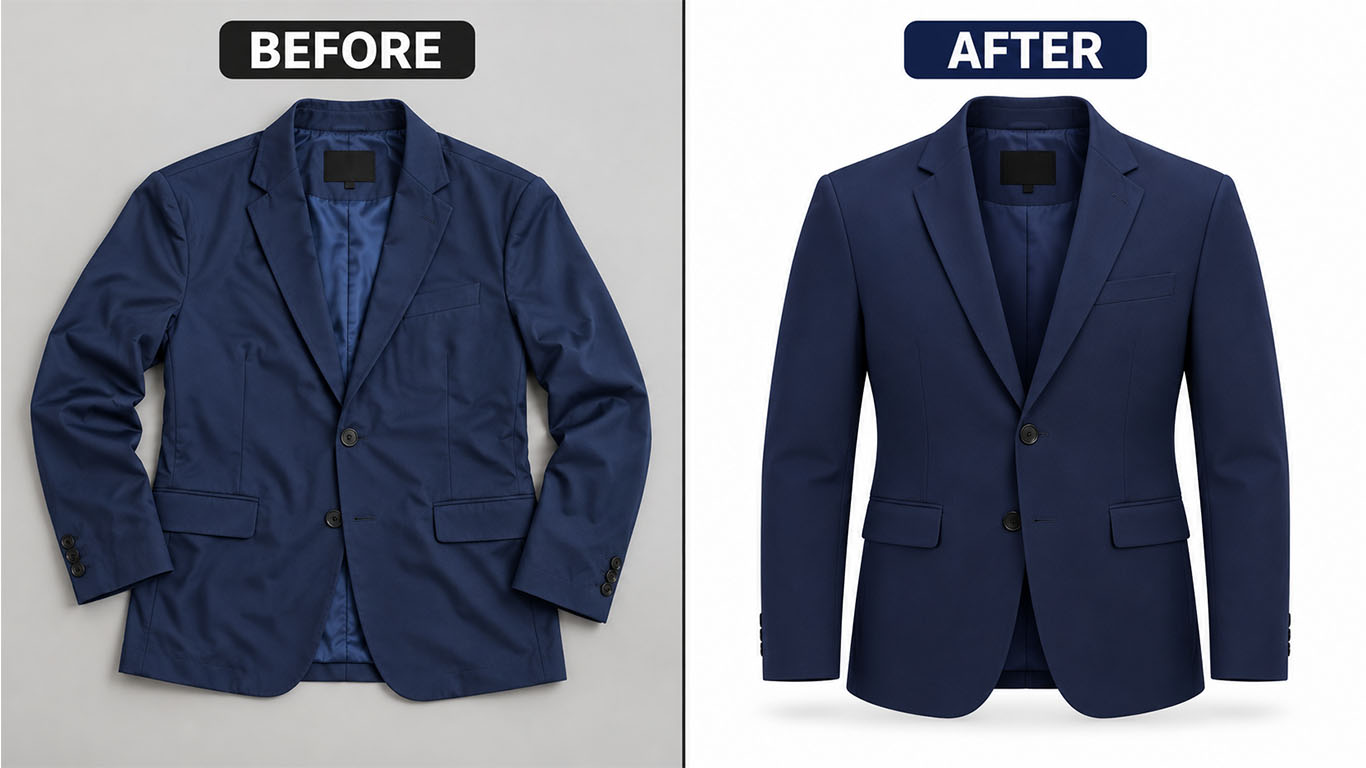
Ghost mannequin effect vs flat lay: compare cost, fit, and sales impact, plus a garment-by-garment guide to choose the right style for your apparel store.
Online shoppers cannot touch fabric. They cannot hold a jacket against their shoulders or feel how a dress drapes. Every judgment they make about your apparel happens through a single rectangle of pixels on a phone screen.
That makes product photography the de facto fitting room of e-commerce. And for most fashion sellers, the choice narrows to two dominant formats: the ghost mannequin effect and the flat lay. One gives clothing a hollow, three-dimensional body. The other lays it out with graphic, top-down precision.
Both styles fill the catalogs of global retailers. Both can look stunning. Yet they communicate very different things to a buyer, and they suit very different garments. Choosing the wrong one can quietly suppress conversions, inflate return rates and make a premium piece look like a bargain-bin item.
This guide dissects both techniques, compares them on cost, perception and practicality, and walks through a garment-by-garment verdict. By the end, you will know exactly which format deserves each product in your store, and why the smartest brands rarely choose just one.
Understanding the Ghost Mannequin Effect
The ghost mannequin effect, also called the invisible mannequin or hollow man technique, makes a garment appear to be worn by an unseen body. The clothing holds its natural volume and contours, yet no model or mannequin is visible. The result is a clean, dimensional product image that shows exactly how the piece sits on a human form.
How the Invisible Mannequin Illusion Is Built
The effect is a marriage of photography and post-production compositing. It usually begins in the studio, where the garment is dressed on a mannequin with removable parts, such as a detachable chest plate or neck piece. The photographer captures the front view, then the back, and often detail angles.
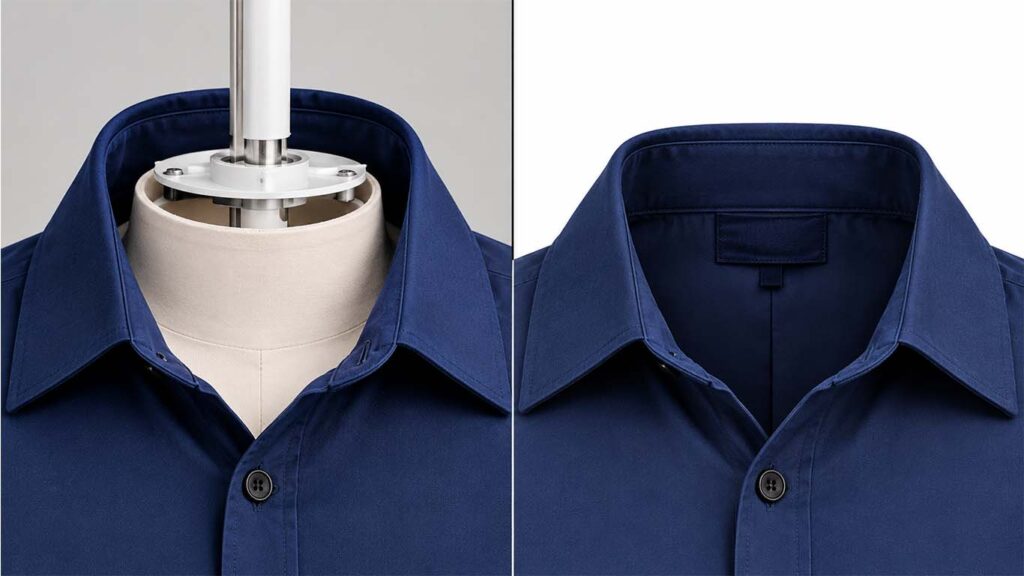
Next comes a second capture. The garment is turned inside out, or laid so that the interior collar, back neckline and inner label are visible. This interior shot supplies the part of the image the mannequin was hiding.
In editing, a retoucher isolates the garment from the mannequin with a precise clipping path, removes every trace of the form, and then grafts the interior shot into the empty space. Shadows are rebuilt, seams are aligned and the fabric tone is matched so that the two captures read as one seamless photograph.
The Neck Joint: Where Craft Meets Compositing
The most delicate part of this work is the neck joint. It is the visible inner back of a collar or neckline, and it is what creates the convincing hollow interior. A poorly executed neck joint betrays the illusion immediately. The perspective looks skewed, the label floats unnaturally, or the inner fabric clashes with the exterior in color and texture.
Done well, the neck joint is invisible as an edit. The viewer simply perceives depth. This is why the ghost mannequin effect is considered one of the more demanding services in apparel retouching. It rewards patient, hand-drawn paths, careful perspective correction and a keen eye for chromatic consistency.
Understanding Flat Lay Photography
Flat lay photography captures a garment lying on a flat surface, shot from directly overhead. It is graphic, orderly and immediately legible. Think of a crisp white T-shirt smoothed onto a seamless backdrop, sleeves folded with geometric intent.
How a Flat Lay Is Styled and Shot
A flat lay looks effortless, but it is a styled discipline. The camera is mounted parallel to the floor, often on a copy stand or overhead rig. Even, diffused lighting prevents harsh hotspots and keeps the fabric texture readable.
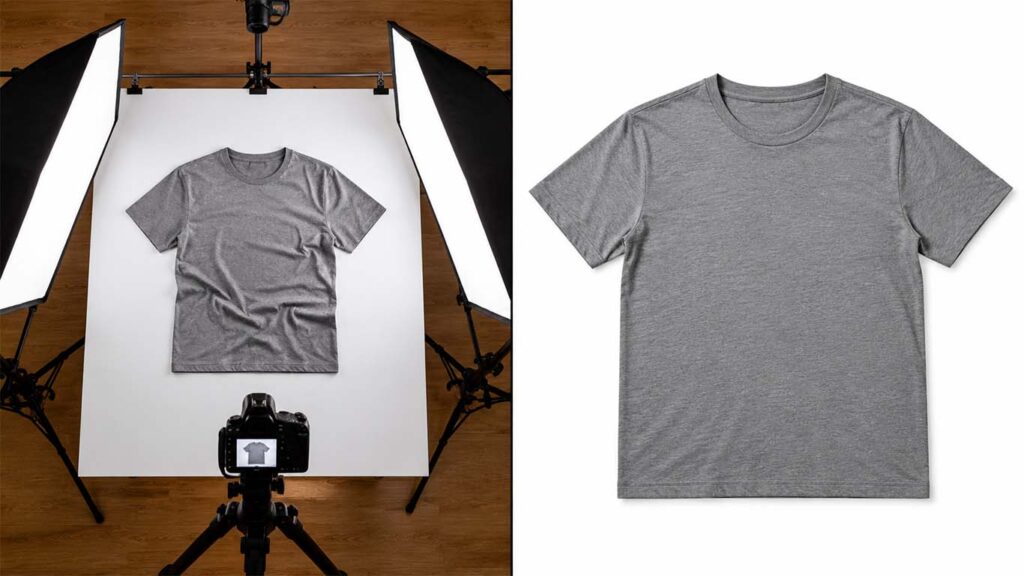
Stylists manipulate the garment with tissue paper, pins and subtle padding to suggest a waist, lift a shoulder or give sleeves a gentle bend. Wrinkles are steamed out. Hems are squared. The goal is a garment that looks tidy and intentional rather than limp.
Post-production is usually lighter than ghost mannequin work. It focuses on background cleanup, color correction, dust and lint removal, and consistent cropping across a collection.
Where Flat Lay Shines
Flat lay excels when the shape of a product reads well in two dimensions. Basic tees, folded denim, socks, scarves, baby clothes and swimwear often look excellent this way. It is also a natural fit for social media, where curated arrangements of outfits and accessories tell a lifestyle story.
Its greatest strength is efficiency. A practiced team can shoot large volumes of flat lays quickly, with modest equipment and minimal retouching. For stores with deep catalogs of simple items, that throughput is a genuine competitive advantage.
Ghost Mannequin Effect vs Flat Lay: Head-to-Head Comparison
Neither format is universally superior. Each wins on different criteria, and the right choice depends on what your product needs to prove to the buyer.
| Criteria | Ghost Mannequin Effect | Flat Lay |
| Shows fit and silhouette | Excellent, true 3D shape | Limited, shape is flattened |
| Shows interior details | Yes, linings, labels, inner collar | Rarely |
| Perceived value | Premium, editorial | Clean, casual |
| Shooting complexity | Higher, mannequin and multiple captures | Lower, single overhead setup |
| Editing complexity | High, compositing and neck joint | Low to moderate |
| Cost per image | Higher | Lower |
| Speed at volume | Moderate | Fast |
| Best garments | Jackets, blazers, dresses, shirts, hoodies | Tees, denim, kidswear, socks, accessories |
| Social media fit | Good for product posts | Excellent for styled, curated posts |
The pattern is clear. Ghost mannequin imagery wins wherever structure, drape and fit drive the purchase decision. Flat lay wins wherever speed, budget and a casual aesthetic matter more than dimensional accuracy.
Which Sells More? The Psychology Behind the Click
For structured and fitted garments, the ghost mannequin effect generally sells more. For simple, flat-shaped basics, a well-styled flat lay can perform just as well at a fraction of the cost. The reasons lie in how shoppers process visual information and manage risk.
Silhouette, Fit Anxiety and Purchase Confidence
The biggest barrier in online apparel sales is fit anxiety. A shopper wonders whether a blazer will hang correctly, whether a dress will flatter, whether a hoodie is boxy or slim. When an image cannot answer those questions, hesitation sets in.
The ghost mannequin effect answers them visually. Shoulders have width. Waists have taper. Hemlines fall where they would on a body. The buyer can mentally project the garment onto themselves, a process sometimes described as embodied simulation. That projection builds confidence, and confidence moves people toward the cart.
A flat lay asks the shopper to do more imaginative work. They must mentally inflate a flattened garment into three dimensions. For a basic tee, that is easy. For a tailored coat, it is guesswork.
Perceived Value and the Premium Signal
Presentation shapes perceived price. A dimensional, studio-grade ghost mannequin image carries an editorial gravitas associated with established fashion houses. The same blazer laid flat can look rumpled and ordinary, no matter how fine the tailoring.
This matters for margins. If your product sits at a mid-range or premium price point, its imagery must justify that price before a single word of the description is read. Ghost mannequin photography gives you that visual credibility.
The Hidden Cost of Returns
Returns are the silent profit killer of fashion e-commerce. Many returns stem from a simple mismatch: the item arrived looking different from what the buyer expected.
Accurate imagery narrows that expectation gap. Because the ghost mannequin effect shows true proportions, inner linings and the real fall of the fabric, buyers receive what they visualized. Fewer surprises mean fewer returns, lower reverse-logistics costs and better reviews. When you calculate the real value of a product photo, include the returns it prevents, not only the sales it creates.
Garment-by-Garment Guide
The smartest way to decide is product by product. Here is how each format performs across the most common apparel categories.
Jackets, Blazers and Coats
Winner: Ghost mannequin effect.
Outerwear lives and dies by structure. Lapels, shoulder pads, collars and linings define its character and its price. A flat lay collapses all of that into a shapeless outline. The ghost mannequin effect preserves the architecture of the garment and reveals the interior lining, which is often a key selling point for quality coats.
Dresses and Gowns
Winner: Ghost mannequin effect.
A dress is about drape, waistline and how the skirt falls. Laid flat, even an exquisite gown can resemble a lifeless rectangle. The invisible mannequin preserves the bodice shape and the flow of the fabric, helping shoppers judge length and flattery. For very flowing maxi dresses, consider adding an on-model shot as well.
T-Shirts, Polos and Everyday Basics
Winner: Either, depending on positioning.
Plain tees read well as flat lays, and the format keeps costs low across many color variants. However, polos, fitted tees and premium basics benefit from ghost mannequin imagery, which shows collar structure and body cut. If your brand sells on fit, choose ghost mannequin. If it sells on price and variety, flat lay is sufficient.
Jeans, Trousers and Shorts
Winner: Flat lay for casual denim, ghost mannequin for tailored trousers.
Folded or laid-out jeans are a familiar, trusted presentation, and they show wash and stitching clearly. Tailored trousers and chinos, however, gain from a dimensional view of the rise, seat and leg taper. Ghost mannequin bottoms also look striking when paired with tops in a coordinated set.
Knitwear, Activewear and Accessories
Winner: Mixed.
Chunky knitwear can stretch and sag on a mannequin, so a carefully styled flat lay often flatters it better. Activewear, on the other hand, sells on compression and contour, which the ghost mannequin effect conveys far better. For accessories such as scarves, socks, belts and small leather goods, flat lay is almost always the practical choice.
Cost, Turnaround and Workflow
Flat lay is cheaper per image. Ghost mannequin is costlier, but often cheaper per sale. That distinction is worth sitting with.
A flat lay workflow needs an overhead rig, a backdrop and a stylist. Editing is mostly cleanup. Large batches move quickly.
A ghost mannequin workflow needs a mannequin with removable sections, more careful dressing, two or more captures per view and skilled compositing. The editing stage is where most of the extra cost sits, because building a flawless neck joint and invisible seams takes time.
This is why many brands separate the two stages. They shoot in-house, where they control styling and sample handling, then outsource the post-production to a specialist retouching team. Outsourcing turns a bottleneck into a predictable, scalable pipeline. A capable partner can process hundreds of ghost mannequin images with consistent quality and a turnaround of around 24 hours, freeing your team to focus on merchandising and growth.
Marketplace and Platform Considerations
Where you sell shapes what you shoot. Major marketplaces impose strict rules on the primary product image.
Amazon, for example, requires the main image to sit on a pure white background (RGB 255, 255, 255) with the product filling about 85 percent of the frame, and it forbids visible mannequins in many apparel categories. The ghost mannequin effect satisfies these rules elegantly, showing shape without breaking the no-mannequin standard. Flat lays also comply, provided the background is truly white and the garment fills the frame. Professional e-commerce photo editing ensures every image passes these checks.
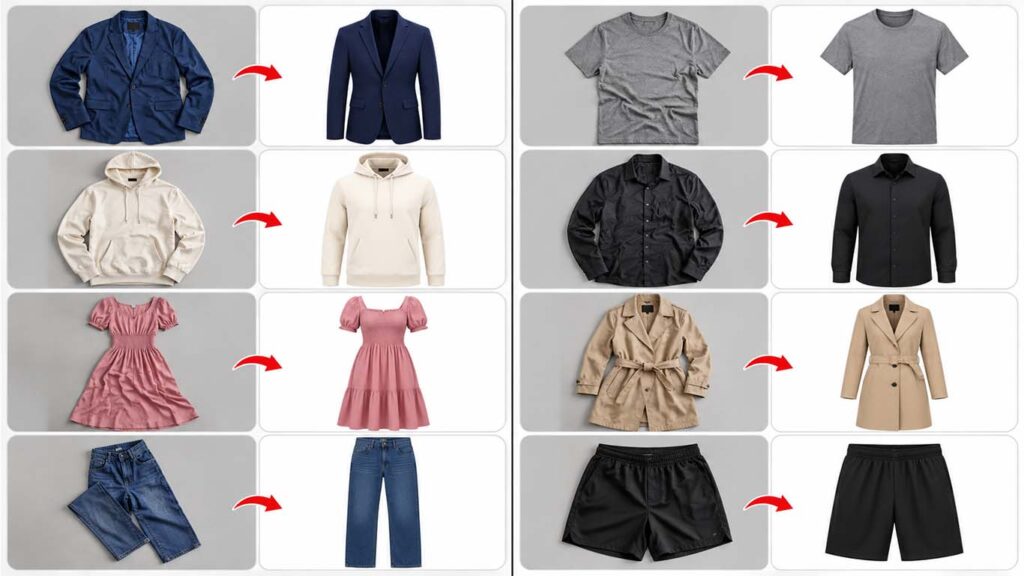
On your own Shopify or WooCommerce store, you have more creative latitude. Consistency becomes the priority. Mixing formats randomly across a category page looks chaotic. Choose one primary format per category and apply it uniformly.
For Instagram, Pinterest and TikTok Shop, flat lay arrangements often earn more saves and shares because they feel curated and editorial. Ghost mannequin images, meanwhile, perform strongly in carousel ads and catalog-driven placements where clarity is paramount.
The Hybrid Strategy Successful Stores Use
The most profitable answer is rarely either-or. Leading fashion retailers blend formats according to the job each image must do.
- Hero image: Ghost mannequin for structured items, so the first impression shows true shape.
- Secondary images: Detail close-ups, interior views and back angles.
- Variant images: Flat lays for color options, which keeps costs manageable across large size and color matrices.
- Lifestyle and social: Styled flat lays and on-model shots that tell a story.
This tiered approach puts your production budget where it has the greatest influence on conversion. Basic items stay cheap to photograph. Hero products get the dimensional treatment they deserve.
Common Mistakes That Undermine Either Style
Even the right format fails when execution is sloppy. Watch for these pitfalls.
- Visible mannequin remnants. Stray edges, plastic sheen at the armholes or a hint of the stand ruin the ghost illusion instantly.
- Mismatched neck joints. An interior shot with different lighting, color or perspective makes the collar look pasted on.
- Off-white backgrounds. A background that looks white to the eye but measures slightly gray can fail marketplace checks.
- Wrinkled, lifeless flat lays. Unsteamed fabric and careless folds signal low quality, which undermines trust.
- Inconsistent cropping and scale. Products that float at different sizes across a category page look amateurish.
- Color inaccuracy. If the product arrives a different shade than the photo, expect returns. Professional color correction is non-negotiable.
- Over-retouching. Erasing every natural fold makes fabric look synthetic and plasticky. Aim for polish, not artifice.
Will AI Replace Professional Ghost Mannequin Editing?
AI tools now offer automated background removal and even generated invisible mannequin effects. For quick drafts and very simple garments, they can save time.
Yet they still stumble on the details that sell premium apparel. Automated tools often struggle with semi-transparent fabrics, fine lace, fur, intricate collars and the precise perspective of a neck joint. They can hallucinate seams, smear textures or invent interior details that do not exist on the real product. That last risk is serious, because inaccurate imagery leads straight back to disappointed buyers and returns.
The pragmatic path is a hybrid one. Use automation for speed where it is reliable, and keep skilled human retouchers on hero images and complex garments. Hand-drawn clipping paths and manual compositing remain the benchmark for fidelity.
Frequently Asked Questions
Is the ghost mannequin effect better than flat lay?
For structured, fitted garments such as jackets, dresses and shirts, the ghost mannequin effect is usually better because it shows true shape and fit. For simple items like basic tees, socks and accessories, flat lay is often just as effective and more affordable.
Does Amazon allow ghost mannequin images?
Yes. Ghost mannequin images work well for Amazon main images because they show the garment’s shape without a visible mannequin, as long as the background is pure white and the product fills most of the frame.
How much does ghost mannequin editing cost?
Pricing depends on garment complexity, the number of views and whether a neck joint is required. Simple items cost less, while multi-part composites with interior details cost more. Most service providers offer bulk discounts for large batches.
Can I combine ghost mannequin and flat lay images in one store?
Absolutely. Many brands use ghost mannequin images as the hero shot and flat lays for color variants or social content. Just keep one consistent primary format within each product category.
What do I need to shoot photos for the ghost mannequin effect?
You need a mannequin with removable parts, a clean backdrop, even lighting and a camera on a tripod. Capture the front, back and interior shots, then hand the files to an experienced retoucher for compositing.
Conclusion: The Verdict
So, which sells more? When fit, structure and perceived value drive the purchase, the ghost mannequin effect consistently gives shoppers more confidence, and confident shoppers buy more and return less. When the product is simple and the catalog is vast, a crisp flat lay delivers strong results with lean economics.
The winning formula is deliberate selection. Map each product to the format that best answers the shopper’s unspoken questions. Put dimensional imagery on your hero and premium items. Use flat lays where efficiency matters. And never compromise on editing quality, because a flawed image costs more than it saves.
If you shoot your own garments and want flawless, marketplace-ready results, Clipping Path World’s ghost mannequin service handles neck joints, compositing and color matching with hand-drawn precision. Request a free trial and see the difference in your own product photos.