
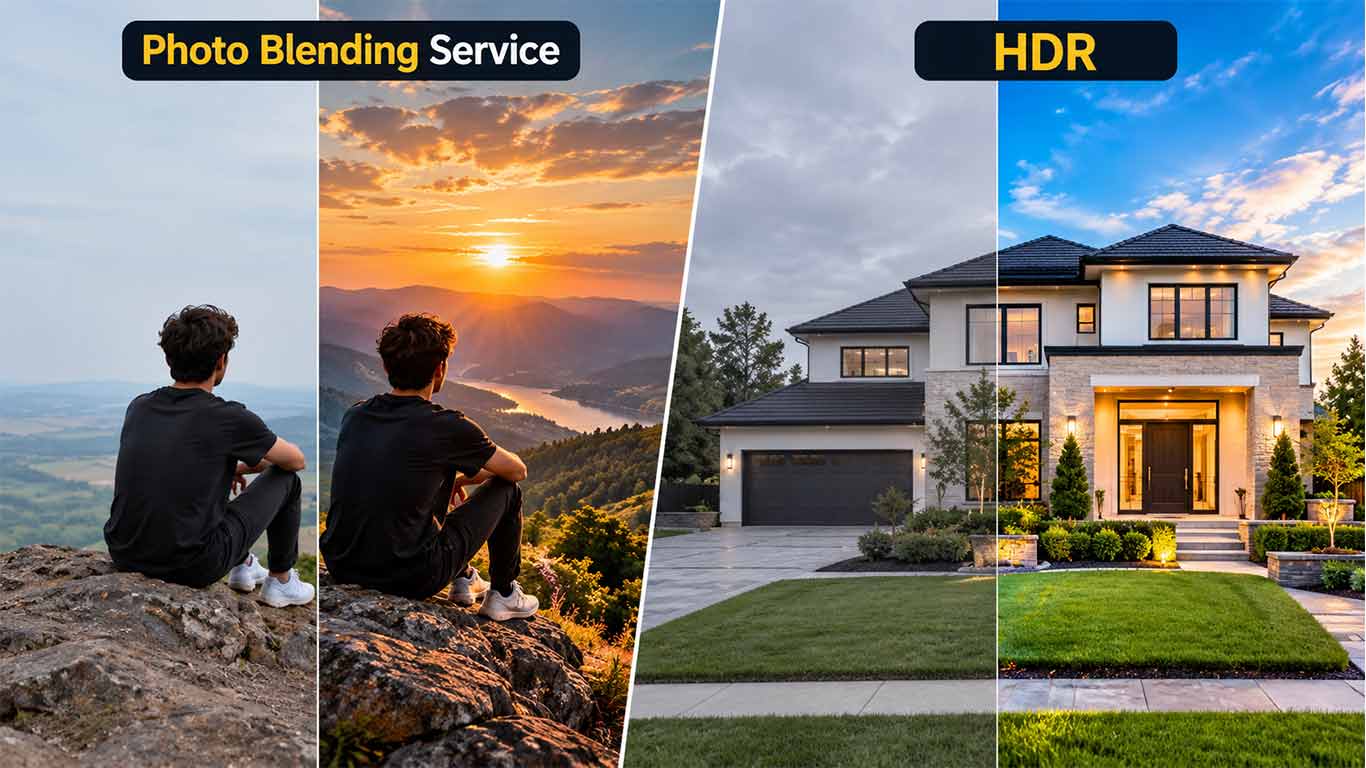
Photo blending vs HDR service: compare realism, color, detail, cost and workflow to choose the best editing style for real estate and interior photos.
Quick answer: For most real estate and interior photos, a professional photo blending service looks better than automated HDR. Manual blending combines bracketed exposures with masks, so windows show clear outdoor views, colors stay accurate and the image looks natural, without the halos, gray tones and oversaturation that HDR often creates. HDR is faster and cheaper, which makes it useful for tight budgets and very high volumes, but blending wins on realism and quality.
Walk into a bright living room on a sunny day and your eyes see everything at once: the sofa, the shadows under the coffee table and the garden outside the window. A camera cannot. Expose for the room and the windows turn into white rectangles. Expose for the windows and the room falls into darkness.
Photographers solve this by shooting several exposures and combining them. The question is how to combine them. Automated HDR software merges everything in seconds. A photo blending service merges them by hand, deciding which exposure belongs where.
The result can look strikingly different. One image feels like a magazine spread. The other can look like a video game. This guide explains why, compares both methods in detail and shows which one suits each type of shoot.
The Problem Both Techniques Solve: Dynamic Range
Dynamic range is the span between the brightest and darkest tones a camera can record in a single shot. Interiors are notoriously difficult because they combine deep shadows inside with intense daylight outside. That contrast can exceed what any sensor captures in one frame.
The solution is bracketing: taking several photos of the same scene at different exposures, typically one dark, one normal and one or more bright. Each frame captures part of the scene well. HDR and photo blending are simply two different ways to merge those frames into one balanced image.
What Is HDR Photography?
HDR, short for high dynamic range, uses software to merge bracketed exposures automatically. Algorithms analyze every frame and compress the full tonal range into one image through a process called tone mapping.
HDR is popular because it is fast and requires little skill. A batch of images can be processed with a single preset. However, tone mapping treats the whole image with the same mathematical logic. It often flattens contrast, shifts colors and produces telltale artifacts: glowing halos around windows, muddy gray walls and an overcooked, artificial look.
Modern HDR tools have improved, and a subtle, carefully tuned HDR edit can look acceptable. Still, the method is fundamentally automated, so it cannot make the nuanced, area-by-area decisions a human editor can.
What Is a Photo Blending Service?
A photo blending service, often called manual exposure blending, combines bracketed frames in Photoshop using layers and masks. An editor chooses the best exposure for each part of the image: the window view from a dark frame, the room from a mid exposure and the shadowed corners from a bright one.
Because a skilled person controls every transition, the final image keeps natural contrast, true colors and realistic light. Blending also allows targeted fixes along the way, such as correcting color casts from mixed lighting, straightening verticals and cleaning reflections in glass.
In practice, blending is part of professional real estate photo editing, where the goal is a bright, inviting image that still looks exactly like the property buyers will visit.
Photo Blending vs HDR: Side-by-Side Comparison
| Criteria | HDR | Photo Blending Service |
| Method | Automated software merge and tone mapping | Manual merge in Photoshop with layers and masks |
| Realism | Can look flat or artificial | Natural, true-to-life |
| Color accuracy | Prone to shifts and oversaturation | Precise, with controlled white balance |
| Window views | Often gray, hazy or haloed | Clear, crisp outdoor views |
| Artifacts | Halos, ghosting, noise | Minimal when done by a skilled editor |
| Speed | Very fast, batch processing | Slower, image by image |
| Cost | Lower | Higher per image |
| Skill required | Low | High |
| Best for | Budget listings, very high volume, quick previews | Luxury listings, architecture, interiors, marketing campaigns |
Key Differences Explained
Realism and Natural Look
The single biggest difference is how real the image feels. HDR compresses tones across the entire frame, which can remove the natural depth created by light and shadow. Rooms may look evenly lit in a way that no real room ever is.
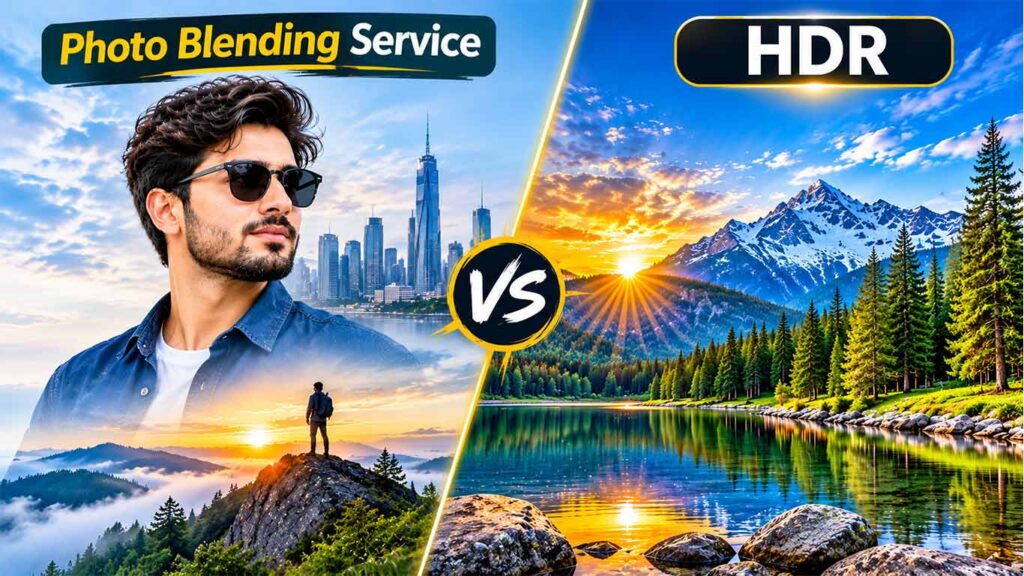
Manual blending preserves the gentle falloff of light from windows, the softness of shadows and the sense of space. Buyers see a room that looks inviting yet believable, which builds trust before they ever schedule a viewing.
Color Accuracy
HDR algorithms often push saturation and shift hues. White walls may turn gray or yellow, wood floors can go orange and greenery outside can look neon.
A blending editor controls color deliberately. Walls stay clean white, wood keeps its true tone and mixed lighting from daylight and indoor bulbs is balanced area by area. Precise color correction is built into the workflow rather than left to chance.
Window Views and Highlights
Window pulls, showing the outdoor view clearly through a window, are a hallmark of professional interior photography. A beautiful garden, ocean or skyline can be a major selling point.
HDR frequently struggles here. Views appear washed out, low in contrast or surrounded by glowing edges. Blending takes the view directly from a dark exposure where it is properly captured, then masks it cleanly into the window frame. The result is a crisp, natural view that adds real value to the listing.
Halos, Ghosting and Artifacts
Because HDR merges frames automatically, any movement between shots, such as swaying trees, curtains or ceiling fans, can create ghosting. High-contrast edges often develop halos, and shadows can become noisy.
In manual blending, the editor chooses exactly which frame supplies each area, so moving elements are taken from a single exposure and edges are refined by hand. Artifacts are rare when the work is done well.
Speed and Cost
HDR wins on speed. Software can merge an entire shoot in minutes. Blending takes longer because an editor works through each image, often spending several minutes or more per photo depending on complexity.
That extra time costs more. However, many agents find the improved presentation attracts more clicks and stronger first impressions, which can easily justify the difference on valuable listings.
Consistency Across a Shoot
HDR presets can produce inconsistent results from room to room because each scene’s contrast affects the algorithm differently. One room may look natural while the next looks overprocessed.
A skilled blending editor maintains a consistent look across the entire property: the same white balance, brightness and style in every image. A cohesive gallery looks more professional and helps buyers understand the flow of the home.
Which Looks Better? A Scenario-by-Scenario Verdict
The right choice depends on the property, the budget and how the images will be used.
Bright Interiors With Large Windows
Winner: Photo blending. Rooms with floor-to-ceiling windows, skylights or strong backlight create extreme contrast. HDR tends to produce gray, haloed windows and flat interiors in these conditions. Manual blending delivers clean window views and natural room light, which is exactly what makes these spaces attractive.
Luxury and High-End Listings
Winner: Photo blending. Premium properties are marketed on atmosphere and detail. Buyers expect magazine-quality images, and agents often reuse the photos in brochures, print ads and social campaigns. The realism and polish of manual blending match the expectations of this market.
Budget and High-Volume Listings
Winner: HDR, with care. For rentals, small apartments or very high volumes on tight budgets, a restrained HDR edit can be practical. The key is subtlety: avoid aggressive presets, check windows and walls for color shifts and correct the worst artifacts. If budget allows even basic blending, the improvement is usually noticeable.
Exteriors and Twilight Shots
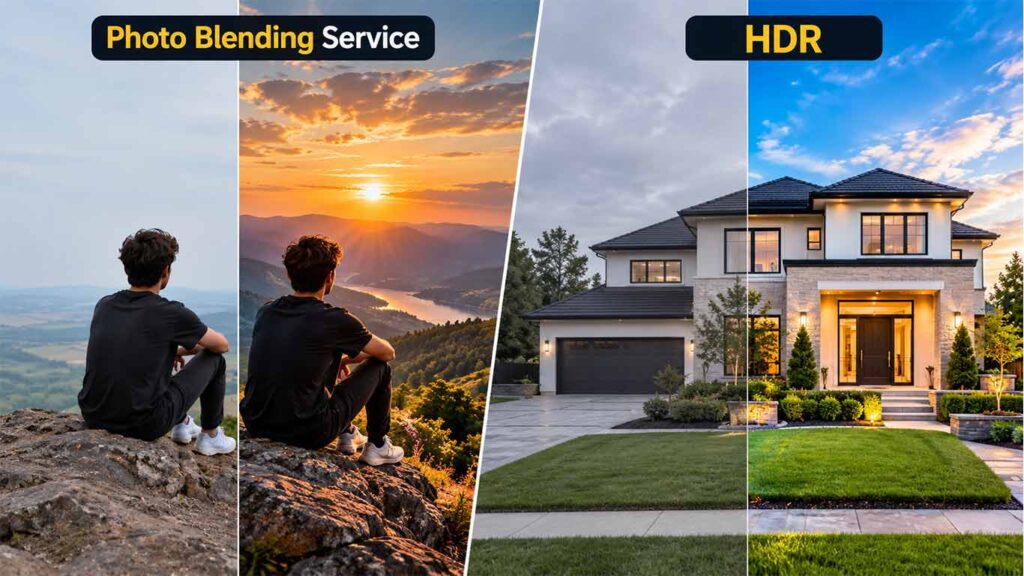
Winner: Usually photo blending. Exteriors with bright skies and shaded facades benefit from blending, which keeps the sky natural and the building detailed. Twilight images, where interior lights glow against a deep blue sky, are particularly sensitive. Blending lets an editor balance warm window light, sky color and exterior lighting precisely. When the sky is dull, it can be replaced during editing, a technique that overlaps with photo manipulation and should always stay realistic.
Quick Comparison Examples
To picture the difference, imagine three typical rooms:
- A kitchen with a garden window: HDR shows a hazy, pale garden and slightly gray cabinets. Blending shows green, sharp foliage through the glass and bright white cabinets.
- A living room with mixed lighting: HDR leaves a yellow cast near the lamps and a blue cast near the windows. Blending neutralizes both so the room has one clean, consistent color.
- A bedroom with a ceiling fan: HDR creates a ghosted, blurry fan from movement between frames. Blending takes the fan from a single exposure, so it appears sharp and still.
What About Flambient Editing?
Flambient is a popular hybrid technique among real estate photographers. The name combines “flash” and “ambient.” The photographer captures an ambient exposure for natural mood and a flash exposure for clean, accurate color, then an editor blends them together.
Flambient produces crisp, color-accurate interiors with natural-looking light and clear window views. It is essentially an advanced form of manual blending. Like other blending methods, it requires skilled editing, so many photographers outsource flambient work to specialists.
In the HDR versus blending debate, flambient sits firmly on the blending side: it relies on careful manual masking rather than automated tone mapping.
Shooting Tips for Better Blends
Great blending starts in camera. These habits make editing faster and results cleaner:
- Use a sturdy tripod. Every bracketed frame must align perfectly. Even slight movement complicates masking.
- Bracket widely enough. Capture at least three to five exposures, typically spaced one to two stops apart, so both the brightest windows and the darkest corners are covered.
- Shoot in RAW. RAW files keep far more highlight and shadow information than JPEGs, giving the editor more flexibility.
- Keep settings consistent. Lock white balance, aperture and ISO across the bracket. Change only shutter speed.
- Turn off or manage mixed lights. Decide whether interior lights stay on. Mixed color temperatures are fixable but easier to control at the source.
- Add a flash frame when possible. A single flash exposure provides clean color reference and makes flambient-style blending possible.
- Watch for movement. Switch off ceiling fans, close windows on breezy days and wait for trees outside to settle.
- Straighten verticals in camera. Keep the camera level at a moderate height to reduce perspective correction later.
Should You Edit In-House or Outsource?
Learning manual blending takes time. Editors must master layer masks, luminosity masks, color balancing and perspective correction, then apply them consistently across dozens of images per shoot.
For many real estate photographers, outsourcing makes better business sense. Shooting is where they earn revenue, while editing consumes evenings. A dedicated blending team can return a full property gallery quickly, often within 24 hours, with a consistent style that agents recognize.
When choosing a provider, look for clear before-and-after samples of interiors with bright windows, consistent white walls across galleries, natural window views and fast, reliable turnaround. A short free trial on one of your own shoots is the best test.
Common Mistakes to Avoid
- Overcooking HDR. Strong presets create halos, gray walls and cartoonish color. If you use HDR, keep it subtle.
- Over-brightening interiors. Rooms that are too bright lose depth and look fake. Aim for bright but believable.
- Neglecting window views. Blown-out or hazy windows waste one of the most attractive elements of a property.
- Ignoring color casts. Yellow tungsten light and blue daylight in the same room must be balanced, or walls will look uneven.
- Leaving verticals crooked. Leaning walls and door frames make even a beautiful blend look amateur.
- Misrepresenting the property. Sky replacement and light enhancement are acceptable, but removing permanent features or altering views misleads buyers and can create legal problems.
- Inconsistent galleries. Mixing HDR and blended images, or varying styles from room to room, makes a listing look disjointed.
Frequently Asked Questions
Is photo blending better than HDR?
For most real estate and interior photography, yes. Manual photo blending produces more natural light, accurate colors and clear window views, while HDR often creates halos, gray tones and an artificial look. HDR is faster and cheaper, so it can still suit budget or very high-volume work.
What is the difference between exposure blending and HDR?
Both combine bracketed exposures. HDR merges them automatically with software and tone mapping. Exposure blending merges them manually in Photoshop using masks, letting an editor choose the best exposure for every part of the image.
Why do HDR real estate photos look fake?
Tone mapping compresses contrast across the entire image, which can flatten depth, shift colors and create halos around bright areas such as windows. Aggressive presets make these effects much stronger.
How many exposures are needed for photo blending?
Three to five bracketed exposures are common for interiors, spaced one to two stops apart. Very high-contrast rooms may need more, and many photographers also add a flash frame.
Is flambient the same as photo blending?
Flambient is a type of photo blending. It combines an ambient exposure with a flash exposure, then blends them manually for natural light and accurate color.
How long does a photo blending service take?
Turnaround depends on volume and complexity, but many professional services deliver a standard property gallery within about 24 hours.
Conclusion
HDR and photo blending both aim to capture what the human eye sees in a high-contrast room. HDR gets there quickly through automation, but often at the cost of realism, color accuracy and clean window views. Manual photo blending takes more time and skill, yet it delivers images that look natural, inviting and true to the property.
For luxury homes, bright interiors, architectural work and any listing where first impressions matter, blending is the clear winner. HDR still has a place for tight budgets and very high volumes, as long as it is used with restraint. If you want blended images without spending your evenings in Photoshop, Clipping Path World’s photo blending service turns bracketed exposures into bright, natural, consistent property photos with clear window views. Request a free trial and see the difference on one of your own shoots.